
Dubai pulls in some of the most powerful people in the world. Royalty, tech billionaires, heads of state, A-list celebrities, and top corporate executives all pass through this city every week. And with that level of profile comes a level of risk that most people never think about.
So what actually goes into protecting a high-profile person in Dubai? What happens before they land at the airport? How do security teams manage motorcades on Sheikh Zayed Road? What about threats that come through a phone screen rather than a physical confrontation?
We break all of that down in this guide. Whether you are a business leader thinking about your own safety, a personal assistant coordinating a visit, or simply someone curious about how professional VIP protection in Dubai actually works this article covers it from start to finish.
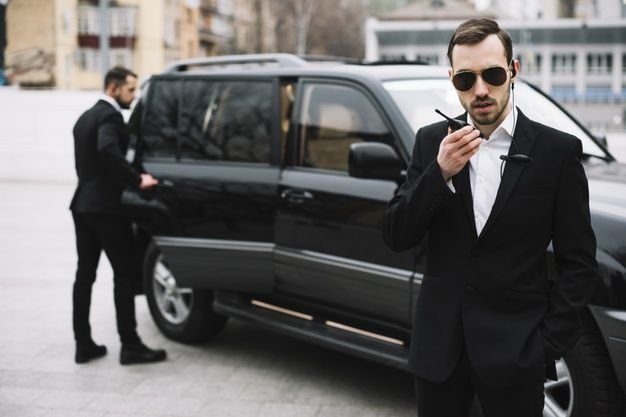
Who Needs VIP Protection in Dubai, and Why
Dubai is a global city. It hosts more than 20 million visitors a year. It is one of the top five financial centers in the world. It sits at the crossroads of Europe, Asia, and Africa. That makes it a natural meeting point for people with power, wealth, and influence.
That same visibility, though, creates exposure.
The people who most often need professional VIP protection services in Dubai include:
- High-net-worth individuals (HNWIs) and ultra-HNWIs who own businesses, assets, or family offices in the UAE
- Government officials and diplomats visiting for bilateral meetings or summits
- Celebrities and entertainers attending events, concerts, and private functions
- Corporate executives from Fortune 500 companies traveling for deals or conferences
- Royal family members from Gulf states and international royals
The global VIP protection services market reached USD 24.1 billion in 2024 and is projected to grow at a compound annual growth rate of 6.7% through 2033 — reaching an estimated USD 43.2 billion by 2033. That growth is not random. It reflects how much the threat environment has changed.
Median spending on executive protection nearly doubled between 2021 and 2024 — rising from roughly $43,000 to over $94,000 per year — and the share of U.S. executives receiving professional protection grew from 24.5% in 2023 to 37% by mid-2025.
Dubai is not immune to these global trends. If anything, the city’s prestige and international traffic make VIP security in the UAE more complex, not less.
The Difference Between VIP Protection and Standard Bodyguard Services
A lot of people use the terms “bodyguard” and “close protection officer” as if they mean the same thing. They do not.
A standard bodyguard typically provides physical presence. They stand near a person, look intimidating, and react if something goes wrong. That reactive approach is outdated and, frankly, not enough for serious protection.
VIP protection or what the industry calls executive protection — works on a completely different model. It is proactive, not reactive.
Here is a simple comparison:
| Feature | Standard Bodyguard | VIP Close Protection |
|---|---|---|
| Threat response | Reactive | Proactive and predictive |
| Planning depth | Minimal | Full threat and risk assessments |
| Team size | Usually 1-2 guards | Coordinated multi-person detail |
| Advance work | None | Full location surveys before arrival |
| Communication | Basic | Encrypted channels, real-time updates |
| Counter-surveillance | Rarely included | Standard practice |
| Digital security | Not included | Fully integrated in most plans |
| Cultural training | General | Location-specific, context-aware |
In Dubai, licensed close protection officers operate under the Security Industry Regulatory Agency (SIRA). SIRA governs training standards, licensing, and operational conduct for all security professionals in the UAE. A quality VIP protection firm will have SIRA-compliant officers on every detail.
The other key difference is discretion. High-profile clients in Dubai often move through luxury hotels, private clubs, business events, and public places where an aggressive security presence would be inappropriate and counterproductive. Good VIP protection blends in. The client moves freely. The security envelope is invisible until it needs to be visible.
Building a VIP Security Plan: From Threat Assessment to Deployment
Every VIP security plan in Dubai starts with a threat assessment. This is not a formality. It is the foundation on which every other decision is built.
A proper threat assessment asks: Who is this person? Who might want to harm them, embarrass them, or disrupt their activities? What is the environment they will be moving through? What are the known risks specific to their industry, nationality, or public profile?
From there, a risk matrix is built. Not every threat carries the same weight. A celebrity at a public event faces a very different risk profile than a government official in closed-door meetings. The security plan must reflect that.
After assessment, the team moves to planning. This covers:
Route planning. Every route a VIP takes in Dubai — from the airport to a hotel, from a hotel to a meeting, from a meeting to a venue — is mapped in advance. Primary routes and secondary routes are identified. Potential choke points are noted. Time-of-day traffic patterns are factored in.
Safe house and safe room identification. In any location the VIP visits, the protection team identifies nearby secure fallback options. These might be private floors in hotels, designated secure rooms in office towers, or pre-arranged locations known only to the team.
Medical contingency planning. Close protection in Dubai means knowing the nearest hospitals capable of trauma care, having team members trained in first aid and emergency response, and having pre-arranged communication with medical facilities if needed.
Communication protocols. Every member of the team operates on a clear communication structure. Roles are defined. Escalation paths are set before the operation begins.
Contingency planning. What happens if the primary vehicle breaks down? What if there is a crowd surge at a public appearance? What if a protest blocks a route? Every scenario with a reasonable probability gets a written contingency plan.
Only after all of this does the team deploy.
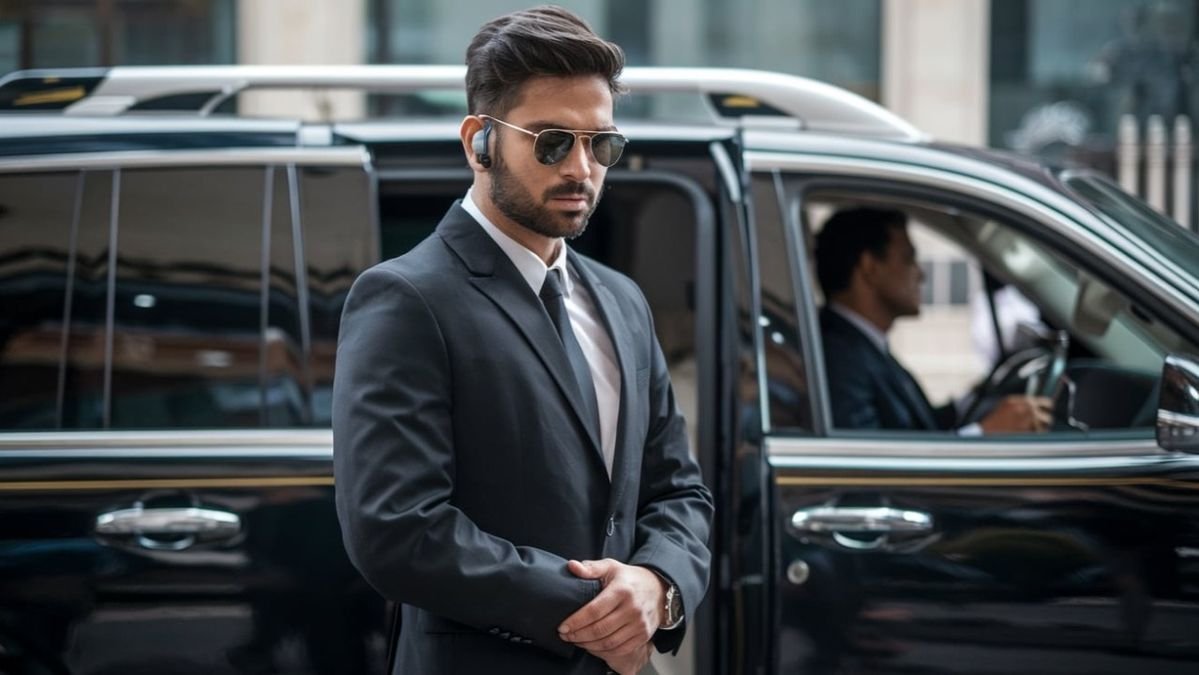
Advance Team Operations: Securing Locations Before the VIP Arrives
One of the most underappreciated parts of high-level VIP protection is the advance work — the site surveys and location security that happen before the client ever sets foot somewhere.
In Dubai, this means visiting every venue, hotel, restaurant, meeting room, and event space the VIP will use. Advance teams typically arrive 24 to 72 hours before the principal.
During an advance visit, the team covers several areas:
Physical access points. How many entry and exit points does the location have? Which can be controlled? Which cannot? Where are the blind spots?
Perimeter checks. What is the surrounding environment like? Are there nearby elevated positions? Are there areas that are difficult to monitor?
Staff vetting coordination. For high-profile visits, advance teams work with venue management to identify which staff will have access to the client’s area. In some cases, background checks are requested.
Emergency exit planning. Every location needs at least two ways out. The team walks those routes before the client arrives.
Communication coverage. Mobile and radio coverage is tested throughout the venue. Signal dead spots are identified and addressed.
In Dubai’s context, this becomes especially important in locations like the Dubai International Financial Centre (DIFC), Jumeirah luxury hotel strips, private residences in Palm Jumeirah, or major event venues like the Dubai World Trade Centre. Each of these environments has its own layout, access dynamics, and security considerations.
Counter-Surveillance Techniques Used in VIP Protection
Most threats do not appear without warning. They are preceded by surveillance. Someone watching routines. Someone mapping movements. Someone testing the edges of a security perimeter.
Counter-surveillance is the practice of detecting and disrupting that kind of hostile reconnaissance before it becomes a threat.
For VIP protection in Dubai, counter-surveillance techniques include:
Route variation. Never taking the same route twice in a row. This is one of the simplest but most effective methods for reducing predictability.
Surveillance detection routes (SDRs). Before a VIP moves to a critical location, members of the team move through the area ahead of time, watching for anyone who appears to be watching them. Unusual loitering, repeated faces across different locations, vehicles that match movement patterns — all of these are red flags.
Observation posts. For high-risk visits, static observation positions are set up around key venues or residences to monitor activity before and during the protection period.
Behavioral pattern analysis. Trained close protection officers are taught to read crowds, not just scan them. They look for behavioral anomalies — people who seem out of place, who move against the natural flow, who show excessive interest in the VIP or the team.
In Dubai, the city’s mix of nationalities and constant tourist traffic makes counter-surveillance particularly skill-dependent. You cannot rely on a single unusual face standing out. You have to watch behavior.
Motorcade and Vehicle Security for VIPs in Dubai
Dubai’s road network is fast, heavily trafficked, and complex. Sheikh Zayed Road connects the key business districts. The Palm Jumeirah has limited ingress and egress points. Downtown Dubai and DIFC create bottlenecks during peak hours.
For VIP transportation in Dubai, a professional motorcade and vehicle security plan accounts for all of this.
A standard VIP motorcade configuration includes:
A lead vehicle. This travels ahead of the VIP’s car by a set distance, checking routes and communicating conditions back to the principal vehicle.
The principal vehicle. This is where the VIP travels. It is typically an armored SUV or sedan, with a trained driver and at least one close protection officer riding alongside the client.
A follow vehicle. This trails directly behind the principal vehicle. It carries additional protection officers and provides a buffer against vehicles approaching from the rear.
Communications between all vehicles are maintained on encrypted channels throughout any movement.
Driver training is a separate but critical element. VIP drivers in Dubai are trained not just in high-performance driving but in anti-ambush techniques, evasive maneuvers, and emergency vehicle recovery.
Vehicle selection matters too. Many protection firms operating in Dubai use armored vehicles rated to at least B6 protection levels for the highest-risk clients. These vehicles can withstand small arms fire and blast threats while maintaining a luxury appearance that does not attract unwanted attention.
Digital and Cyber Security as Part of a VIP Protection Plan
Physical protection covers one dimension of risk. But for most high-profile individuals in Dubai today, the threats that move through digital channels are just as serious — and often more difficult to detect.
Nearly USD 16.6 billion in cybercrime losses were reported to the FBI’s Internet Crime Complaint Center in 2024 alone, and wealthy individuals face outsized risk because the potential payoff for criminals is significantly higher.
For VIP protection in Dubai, digital security has become a standard part of any complete protection plan. This covers several areas:
Device security. All devices used by the VIP and their close team are secured with encrypted communication apps, multi-factor authentication, and regular security audits. Unsecured personal devices are one of the most common entry points for targeted attacks.
Communications security. Standard phone calls and messages can be intercepted. VIPs at high risk use encrypted voice and messaging platforms for sensitive communications.
Social media monitoring. Public posts — by the VIP or by people around them — can inadvertently reveal location, schedule, or travel plans. A good protection team monitors the client’s digital footprint and coaches staff and family on what not to post.
Network security. Hotel Wi-Fi networks and public hotspots in Dubai are convenient but not secure. VIP protection plans include the use of private, secured network connections for all sensitive communications while traveling.
Identity and financial protection. High-net-worth individuals are prime targets for identity fraud, SIM swapping, and financial account compromise. Digital security services for VIPs in Dubai include monitoring for suspicious account activity, credential exposure on the dark web, and attempts to access personal or corporate accounts.
This is an area where many competitors in the Dubai market still treat digital security as an add-on rather than a core service. That is a significant gap. A client who is physically protected but digitally exposed is not fully protected.
Cultural Considerations for VIP Security in the UAE
Dubai is a Muslim-majority country operating under UAE federal law and local emirate regulations. For a VIP protection team operating here, cultural awareness is not optional it is operational.
There are several areas where cultural knowledge directly affects how a security plan is built and executed.
Gender protocols. Female VIP clients may require female close protection officers in certain environments particularly for movements through religious sites, private gatherings, or locations where male officers would be inappropriate. Quality VIP protection firms in Dubai maintain trained female CPO teams for exactly this reason.
Religious observance. During Ramadan, schedules shift significantly. Business meetings, public events, and venue operations all operate on different timings. An advance team needs to factor in Iftar, Suhoor, and Friday prayer schedules when planning routes and timings.
Legal framework. The UAE has strict laws around firearms, behavior in public spaces, and conduct during public gatherings. Close protection teams operating in Dubai must be fully familiar with these regulations. Operating outside of UAE legal frameworks even unintentionally — can create serious legal exposure for both the client and the protection firm.
Local authority coordination. Dubai has one of the most capable and well-resourced police forces in the world. For major VIP visits, professional protection firms maintain relationships with Dubai Police and can coordinate support when needed. This is a hallmark of an experienced, well-connected security operation.
Etiquette in elite settings. Many of Dubai’s most important business and social events take place in settings with high protocol — royal receptions, formal dinners, private club gatherings. Protection officers who do not understand local etiquette can create friction that undermines the client’s experience and relationships.
Why Vraaas Security’s VIP Protection Stands Apart
Most security firms in Dubai offer a menu of services. Vraaas Security builds protection architectures around the individual.
The difference starts before the first meeting. Vraaas conducts a complete threat and vulnerability assessment for every new VIP client one that covers physical exposure, digital footprint, travel patterns, and relationship networks. No two clients receive the same plan, because no two clients face the same risk.
The Vraaas close protection team is drawn from backgrounds in military special operations, law enforcement, and intelligence work. Every officer is SIRA-licensed and trained specifically for the Dubai and wider UAE operational environment. They know the roads, the venues, the cultural protocols, and the legal framework.
The digital security layer is built in from day one — not bolted on afterward. Vraaas coordinates physical and cyber protection as a single integrated operation, which reflects how modern threat actors actually work.
For motorcade and vehicle operations, Vraaas maintains a fleet of high-specification vehicles and a team of trained protection drivers who are as much a part of the security detail as the officers on the ground.
What Vraaas does not do is make protection feel like a burden. High-profile clients in Dubai want to work, meet, attend events, and move freely. The job of a close protection team is to make that possible not to create a security theatre that slows everything down and draws attention.
If you are responsible for a high-profile individual’s safety in Dubai, or if you are looking to assess your own security requirements, get in touch with the Vraaas Security team for a confidential consultation. We work with clients from across the globe who require the highest standard of personal protection in the UAE.
Frequently Asked Questions About VIP Protection in Dubai
1. What is VIP protection in Dubai, and who is it for?
VIP protection in Dubai — also called close protection or executive protection — is a specialized security service designed for high-profile individuals. This includes high-net-worth individuals, government officials, corporate executives, celebrities, and anyone who faces elevated personal security risks due to their profile, wealth, or public visibility.
2. How is VIP protection different from hiring a standard security guard?
Standard security guards are trained to monitor and respond to incidents. Close protection officers are trained to prevent incidents from happening in the first place. They conduct threat assessments, plan secure routes, run advance checks on locations, and monitor for surveillance activity. The approach is proactive rather than reactive.
3. Do VIP protection firms in Dubai need to be licensed?
Yes. All security companies operating in Dubai must be licensed by the Security Industry Regulatory Agency (SIRA). Individual close protection officers must also hold valid SIRA certifications. Always verify licensing before engaging any security firm in the UAE.
4. What does an advance team actually do?
An advance team visits every location a VIP will use — hotels, meeting venues, event spaces — before the client arrives. They check entry and exit points, identify security vulnerabilities, coordinate with venue management, map emergency routes, and brief the rest of the protection team on the layout and any concerns.
5. Is armored vehicle transportation standard for VIP protection in Dubai?
It depends on the client’s risk profile. For the highest-risk clients — including government officials, certain executives, and individuals facing specific threats — armored vehicles rated to B6 protection levels or higher are standard. For lower-risk profiles, high-specification non-armored vehicles with trained protection drivers are typically used.
6. How does digital security fit into a VIP protection plan?
Cyber threats are now a core part of the risk environment for high-profile individuals. A complete VIP protection plan covers device security, encrypted communications, social media monitoring, network protection during travel, and identity monitoring. Vraaas Security integrates digital protection with physical protection as part of every client plan.
7. Can VIP protection teams include female close protection officers?
Yes. Quality VIP protection firms in Dubai maintain trained female CPO teams. This is particularly important for female clients, visits to environments where cultural or religious protocols apply, and close personal protection in private settings.
8. What cultural considerations matter for VIP protection in the UAE?
Key considerations include understanding Ramadan schedules and how they affect movement and venue operations, respecting gender protocols in certain settings, operating within UAE law (including regulations around firearms and public conduct), and maintaining appropriate conduct at formal and cultural events.
9. How much does VIP protection cost in Dubai?
Costs vary depending on the level of risk, the number of officers required, the duration of the detail, vehicle requirements, and whether digital security services are included. Clients should request a personalized security assessment to get an accurate picture. The cost of inadequate protection is always higher than the cost of proper protection.
10. Can VIP protection services be arranged for short visits to Dubai?
Yes. Many high-profile individuals visiting Dubai for a few days or even a single event require professional close protection for the duration of their stay. Experienced firms can mobilize a full protection detail on short notice, provided sufficient time for advance work and planning.
11. What is counter-surveillance, and why does it matter?
Counter-surveillance is the practice of detecting and disrupting hostile surveillance before it becomes a threat. Most attacks on VIPs are preceded by a period of reconnaissance. Counter-surveillance teams look for behavioral patterns that suggest someone is watching the client, mapping their movements, or testing their security arrangements. It is one of the most effective ways to prevent incidents before they occur.
12. How does VIP protection in Dubai coordinate with local authorities?
Professional security firms in Dubai maintain working relationships with Dubai Police and other relevant authorities. For major visits or events, this coordination can include support from local law enforcement, traffic management assistance, and communication protocols in the event of an incident. This kind of coordination is only possible for firms with established local credentials and relationships.
Contact Vraaas Security Services
Have questions about VIP event security, close protection, or a custom security plan for your next event in Dubai? Our team is ready to help any time.
| 📞 Phone | +971 523011999 |
| info@vraaassecurity.com | |
| 🌐 Website | vraaassecurity.com |
| 📍 Address | Capital Golden Tower, Office No. 1105, Business Bay, Dubai, UAE |
Connect With Us
Follow Vraaas Security on social media for security tips, event highlights, and updates on VIP protection services across the UAE. Join a growing community of event organizers and security professionals who trust us.
- Instagram: @vraaas_security
- Facebook: Vraaas Security Services
- LinkedIn: Vraaas Security Services
- TikTok: @vraaas_security
Vraaas Security Services — Protecting What Matters Most in Dubai.