
Dubai is one of the busiest event cities in the world. From multi-billion-dollar investor summits at the DIFC to product launches at five-star hotels on Sheikh Zayed Road the city never slows down. And with that level of activity comes a level of responsibility that every event manager must take seriously.
Corporate event security in Dubai is not just about placing guards at the door. It is a full system. It covers risk analysis, access control, VIP movement, crowd management, venue coordination, and post-event wrap-up. Get one of these wrong, and the consequences can range from embarrassing to dangerous.
So before your next big event, let’s walk through everything you need to know clearly, practically, and without the fluff.

Why Corporate Event Security in Dubai Is Different
Dubai operates under strict rules. The Security Industry Regulatory Agency, known as SIRA, is the government body that licenses and regulates all private security companies in the emirate. Every security guard, supervisor, and company that works at a corporate event must hold a valid SIRA license. This is not optional it is the law.
What this means for you as an event manager is simple: if you hire a security company that is not SIRA-approved, you are taking a legal risk, not just a safety risk.
Beyond the regulatory side, Dubai’s corporate event landscape is unique in scale. Dubai led the UAE event management market with a 55.37% share in 2024, and Dubai Business Events secured 437 international bids that year, expected to attract more than 210,500 delegates. These numbers show just how serious the corporate events scene is here — and why professional security is not an afterthought but a core part of event planning.
Which Corporate Events Actually Need Professional Security?
Short answer: most of them. But let’s be specific.
Product Launches bring media, influencers, brand partners, and sometimes celebrities under one roof. There are cameras everywhere, tight schedules, and high-value merchandise or prototypes on display. Without proper access control, things go wrong fast.
Investor Summits and Board Meetings involve confidential financial conversations and high-net-worth individuals. These events need both physical security and strict information management.
Galas and Award Nights are high-profile public-facing events. They have VIP tables, open bar areas, large crowds, and emotional moments — all of which require calm, trained professionals to manage without disrupting the atmosphere.
Conferences and Trade Exhibitions can draw hundreds or thousands of attendees over multiple days. Managing crowd flow, protecting exhibitor equipment, and maintaining perimeter security across a large venue is a serious operational challenge.
The rule of thumb? If your guest list includes senior executives, foreign delegates, celebrities, or government officials — you need professional corporate event security. No exceptions.
Threat Assessment Before the Event: What Security Companies Actually Look For
Good security starts weeks before the first guest walks through the door. A professional security company will conduct what is called a threat assessment — a careful review of every factor that could create a risk at your event.
Here is what that process actually looks at:
| Assessment Area | What Gets Reviewed |
|---|---|
| Venue Layout | Entry and exit points, blind spots, emergency exits, parking access |
| Guest Profile | VIPs, foreign nationals, politically exposed persons, media |
| Event Type | Public vs. private, open vs. invite-only |
| Location History | Has the venue had past incidents? |
| External Threats | Protests, traffic disruptions, known criminal activity nearby |
| Internal Risks | Disgruntled employees, unauthorized press, gatecrashers |
This assessment shapes everything that follows. The number of guards, their placement, the communication plan, and the emergency protocols all flow from what is found here.
A professional threat assessment is not a generic checklist. It is specific to your event, your venue, your guests, and the date. An investor summit at a private DIFC boardroom has a very different risk profile than a product launch at a beach venue in JBR.
Access Control, Crowd Management, and Perimeter Security
Once the threat assessment is done, the three pillars of on-the-ground security come into play: access control, crowd management, and perimeter security.
Access Control is the first line of defense. It means deciding who gets in, how they get in, and what happens if someone tries to get in without authorization. At a well-run corporate event in Dubai, this includes digital guest list verification, ID checks, badge scanning or QR code entry, and separate access tiers for general guests, staff, and VIPs.
Access control is not just about stopping unauthorized people. It is also about managing pace. A bottleneck at the entrance creates frustration for guests and confusion for security. Good access management keeps people moving while keeping checks thorough.
Crowd Management is about what happens once people are inside. Trained security personnel monitor guest behavior, watch for signs of overcrowding in certain areas, manage queues at registration desks or buffet stations, and stay alert for any conflict or medical situation.
At large conferences or gala dinners, crowd dynamics can shift quickly. A trained security team reads these shifts early and responds before a small problem becomes a larger one.
Perimeter Security covers the outside of the venue. This includes parking areas, back entrances, loading bays, and the space immediately surrounding the event. Unauthorized vehicles, protestors, paparazzi, and uninvited guests often try to access events from these less-visible points. A well-managed perimeter closes these gaps.
VIP Guest Protocols: Arrivals, Movement, and Exits
If your event includes VIP guests — whether senior executives, government officials, celebrities, or foreign dignitaries — their security needs to be handled separately and carefully.
The key stages of VIP security at a corporate event are:
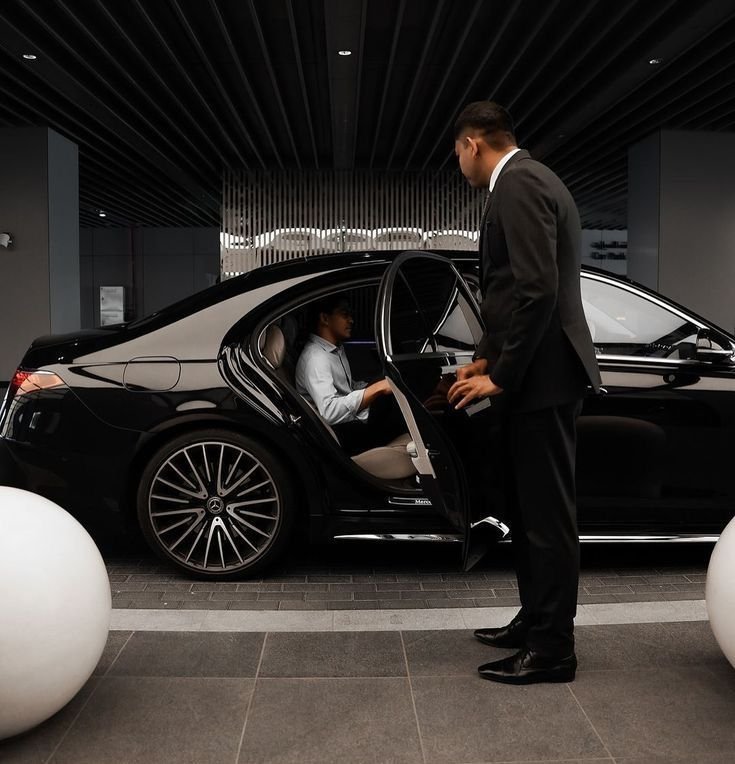
Arrival. A dedicated arrival lane or drop-off point, away from general guest traffic. A security officer meets the VIP at the vehicle and escorts them directly to a secure holding area or the event floor, bypassing public queues entirely.
Movement Inside the Venue. VIP guests are typically moved through pre-cleared routes. Security officers walk ahead and alongside, creating a soft cordon. At all times, at least one officer knows the VIP’s location and who they are speaking to.
The Event Floor. VIP areas are cordoned off from general guest areas. Access is controlled through wristbands, separate table lists, or physical barriers. Security officers stationed near VIP areas are in plain clothes to keep the atmosphere relaxed.
Exits. Equally important as arrivals. VIP exits are pre-planned, often using a separate route from the main guest exit. Vehicles are confirmed and ready before the escort begins. The goal is to move the VIP from inside the venue to their vehicle in under two minutes.
Risk assessments for VIP protection evaluate factors such as travel patterns, public exposure, business activities, event schedules, and location-based risks to design a tailored protection strategy. This is why you cannot leave VIP protocols to the last minute — they require advance planning that is specific to each individual.
Plainclothes vs. Uniformed Security: Which One Does Your Event Need?
This is a question most event managers do not ask until it is too late. The honest answer is: most corporate events in Dubai need both.
Uniformed security guards provide visible deterrence. When guests see a uniformed officer at the entrance or perimeter, they know the event is organized and secure. It sets a professional tone and discourages bad behavior before it starts. Uniformed guards are best placed at entry and exit points, perimeter positions, and areas where physical access control is needed.
Plainclothes security officers blend into the event as guests or staff. They move through the crowd, observe behavior, and communicate via discreet earpieces. They are ideal for monitoring general guest areas, staying close to VIPs without drawing attention, and watching for threats that a uniformed presence might actually cause suspects to avoid.
Think of uniformed security as the visible layer and plainclothes officers as the invisible layer. Together they cover what neither could cover alone.
For a black-tie gala at a luxury hotel, for example, a heavy uniformed presence at the dinner tables would feel out of place. But two or three plainclothes officers moving through the room, watching, and communicating that is invisible and effective.
Coordination With Venue Staff, Police, and Emergency Services
One of the biggest gaps in corporate event security is poor coordination between the security company and everyone else on-site. Venue staff, hotel security teams, Dubai Police, and emergency medical services all need to know their roles before the event begins.
Here is how a well-coordinated event operates:
The security company meets with venue management at least one week before the event. They walk the space together, identify risk points, agree on access routes, and confirm communication protocols.
A clear chain of command is established. Everyone on the security team knows who reports to whom, and who has authority to make fast decisions if something goes wrong.
Dubai Police notification may be required for certain events particularly those with foreign government officials, large public-facing elements, or events held in open or semi-public spaces. A professional security company handles this communication as part of their service.
Emergency services ambulance, fire — are briefed on the venue layout and given direct contact numbers for the lead security officer. If a medical emergency occurs during a conference of 500 delegates, response time can be the difference between a handled incident and a tragedy.
For major events in Dubai, emergency coordination includes ambulance teams positioned in high-density areas, with pre-hospital emergency care delivered in line with international standards. Your corporate event should reflect that same level of preparation, scaled to its size.
Post-Event Security: What Happens After the Guests Leave
Most event managers breathe a sigh of relief when the last guest walks out. But a professional security team knows the job is not done yet.
Post-event security covers several things that often get overlooked:
Equipment and asset protection during breakdown. AV equipment, branded merchandise, trade show displays, and exhibition stands are all vulnerable during the hours after an event ends. Theft and damage most commonly happen at this stage, not during the event itself.
Securing sensitive materials. Corporate events often produce printed materials — contracts, pitch decks, confidential presentations, delegate lists. After the event, these need to be collected and either returned to the client or securely disposed of.
Parking area monitoring. As guests leave, parking areas become active. Security should remain in place until the last vehicle has exited.
Incident reporting. A professional security company will provide a written incident report within 24 hours of the event. This documents everything that happened including minor issues that did not escalate and serves as a record for your own files and for any insurance purposes.
Post-event security is often the cheapest part of the overall security package. But skipping it is a false economy. The few hours after an event ends are when most physical theft and property damage occur.
Common Mistakes Event Managers Make With Corporate Event Security
We have seen the same mistakes repeated across events of all sizes. Here are the most common ones:
Booking the security company too late. Good security companies in Dubai book up quickly, especially during peak MICE season between October and April. Book at least four to six weeks in advance for a mid-sized event, and three months or more for anything large.
Focusing only on the guest-facing areas. Many event managers brief security on the main hall but forget about loading docks, service corridors, and outdoor areas. A threat assessment covers all of these. If your security plan does not, it is incomplete.
Not communicating the VIP list in advance. Security officers cannot protect someone they do not know is coming. Always share the full VIP list, photos if possible, and arrival times at least 48 hours before the event.
Assuming the venue’s in-house security is enough. Venue security teams protect the venue. They are not there to manage your event specifically. For any corporate event with more than 100 guests, you need a dedicated event security team on top of whatever the venue provides.
Why Choose Vraaas Security for Your Corporate Event in Dubai
Vraaas Security brings together licensed SIRA-approved professionals with deep experience in corporate event security across Dubai and the wider UAE. We do not offer a one-size-fits-all package. Every event we work on gets its own threat assessment, its own security plan, and its own dedicated team.
Our services cover the full event cycle — from pre-event site walkthroughs and threat analysis, through live event management with both uniformed and plainclothes officers, to post-event asset protection and incident reporting.
We work with event managers, corporate communications teams, and hotel partners across Dubai to make sure the security plan fits seamlessly into the broader event experience. Our VIP protocols are discreet, our crowd management is calm, and our communication with police and emergency services is built into every plan from the start.
When the guest list includes people who matter your investors, your clients, your leadership, your guests you need a team that treats every detail as if it matters. That is how we work at Vraaas Security.
To get a tailored security plan for your next corporate event in Dubai, contact our team today. We offer an initial consultation at no charge. Let’s build something that works.
Frequently Asked Questions About Corporate Event Security in Dubai
1. Do I legally need a licensed security company for a corporate event in Dubai?
Yes. Any security company operating in Dubai must be licensed by SIRA, the Security Industry Regulatory Agency. Hiring an unlicensed provider exposes you to legal liability. Always ask for SIRA license details before signing any contract.
2. How early should I book corporate event security in Dubai?
For events with up to 200 guests, four to six weeks in advance is a safe window. For larger events, international conferences, or events with government guests, book at least three months ahead. Dubai’s peak event season runs from October to April, and good security teams fill up fast.
3. What is a threat assessment and is it really necessary?
A threat assessment is a professional review of every risk factor specific to your event — venue layout, guest profile, location, event type, and more. Yes, it is necessary. Without it, security placement is guesswork rather than strategy.
4. How many security guards do I need for my event?
This depends on venue size, guest count, event type, and risk level. A professional security company will recommend staffing levels after the site walkthrough. As a general guide, one security officer per 50 to 75 guests is a common starting point for a controlled corporate event, but a VIP-heavy event may require more.
5. What is the difference between close protection and general event security?
General event security manages access, crowd flow, and perimeter safety for all guests. Close protection, or executive protection, is dedicated to one individual or a small group — a CEO, a visiting minister, a celebrity speaker. It involves advance planning, dedicated officers, and specific movement protocols.
6. Should security officers be in uniform or plainclothes at my event?
Most corporate events benefit from both. Uniformed officers at entry and exit points provide visible deterrence. Plainclothes officers inside the venue provide discreet monitoring. Your security provider should recommend the right mix based on your event type and venue.
7. Can the security company coordinate with Dubai Police on my behalf?
Yes. A professional security company handles this as part of their service for events that require police notification or coordination. This is especially relevant for events with foreign officials, large open-attendance elements, or events at public-facing venues.
8. What happens if there is a medical emergency during my event?
A trained security team has a direct protocol for medical emergencies. They contact emergency services immediately, clear the area around the affected person, and keep other guests calm. This is why pre-event coordination with emergency services matters response time improves when responders already know the venue layout.
9. Do I need post-event security, or can I rely on the venue to cover that?
Post-event security is worth the investment. Theft and property damage are most likely to occur during the breakdown phase when security attention relaxes. Your security team should remain on-site until all client assets and sensitive materials are secured or removed.
10. How does VIP security work at a corporate gala or conference?
VIPs are assigned dedicated officers who manage their arrival, movement inside the venue, and departure. Routes are pre-cleared, vehicles are confirmed in advance, and the VIP never waits in public-facing queues or unsecured areas. The protocols are planned in advance and adjusted in real time as needed.
11. Is corporate event security expensive in Dubai?
Security is one of the most cost-effective investments you can make in an event. The cost of a security breach — in reputation, legal exposure, or physical harm — far exceeds the cost of proper planning. Get a clear quote that outlines exactly what is covered, including staff numbers, hours, and post-event support.
12. What should I look for in a corporate event security company in Dubai?
Look for SIRA licensing, proven experience in corporate events specifically, a clear threat assessment process, references from past clients, and a team that communicates clearly before, during, and after the event. A good security partner makes your event better, not more complicated.
Contact Vraaas Security Services
Have questions about VIP event security, close protection, or a custom security plan for your next event in Dubai? Our team is ready to help any time.
| 📞 Phone | +971 523011999 |
| info@vraaassecurity.com | |
| 🌐 Website | vraaassecurity.com |
| 📍 Address | Capital Golden Tower, Office No. 1105, Business Bay, Dubai, UAE |
Connect With Us
Follow Vraaas Security on social media for security tips, event highlights, and updates on VIP protection services across the UAE. Join a growing community of event organizers and security professionals who trust us.
- Instagram: @vraaas_security
- Facebook: Vraaas Security Services
- LinkedIn: Vraaas Security Services
- TikTok: @vraaas_security
Vraaas Security Services — Protecting What Matters Most in Dubai.