
Ask any nightclub owner in Dubai what keeps them up at night and security rarely tops the list until something goes wrong. A fight breaks out near the DJ booth on a Friday at 1am. A guest slips past ID checks with a fake passport. A VIP host loses track of a bottle service tab during a rush. None of these are hypothetical. They happen most weekends in venues across DIFC, JBR, Downtown, and Al Barsha, and they are exactly why a nightclub security company Dubai venues can rely on looks nothing like a standard guarding contract.
Vraaas Security works with nightclubs, bars, lounges, beach clubs, and hotel entertainment venues across the city, and this guide covers what actually separates specialist nightlife security from the guard-at-the-door model most operators start with. If you’re opening a new venue, reviewing your current security provider, or trying to figure out why last weekend went sideways, read on.
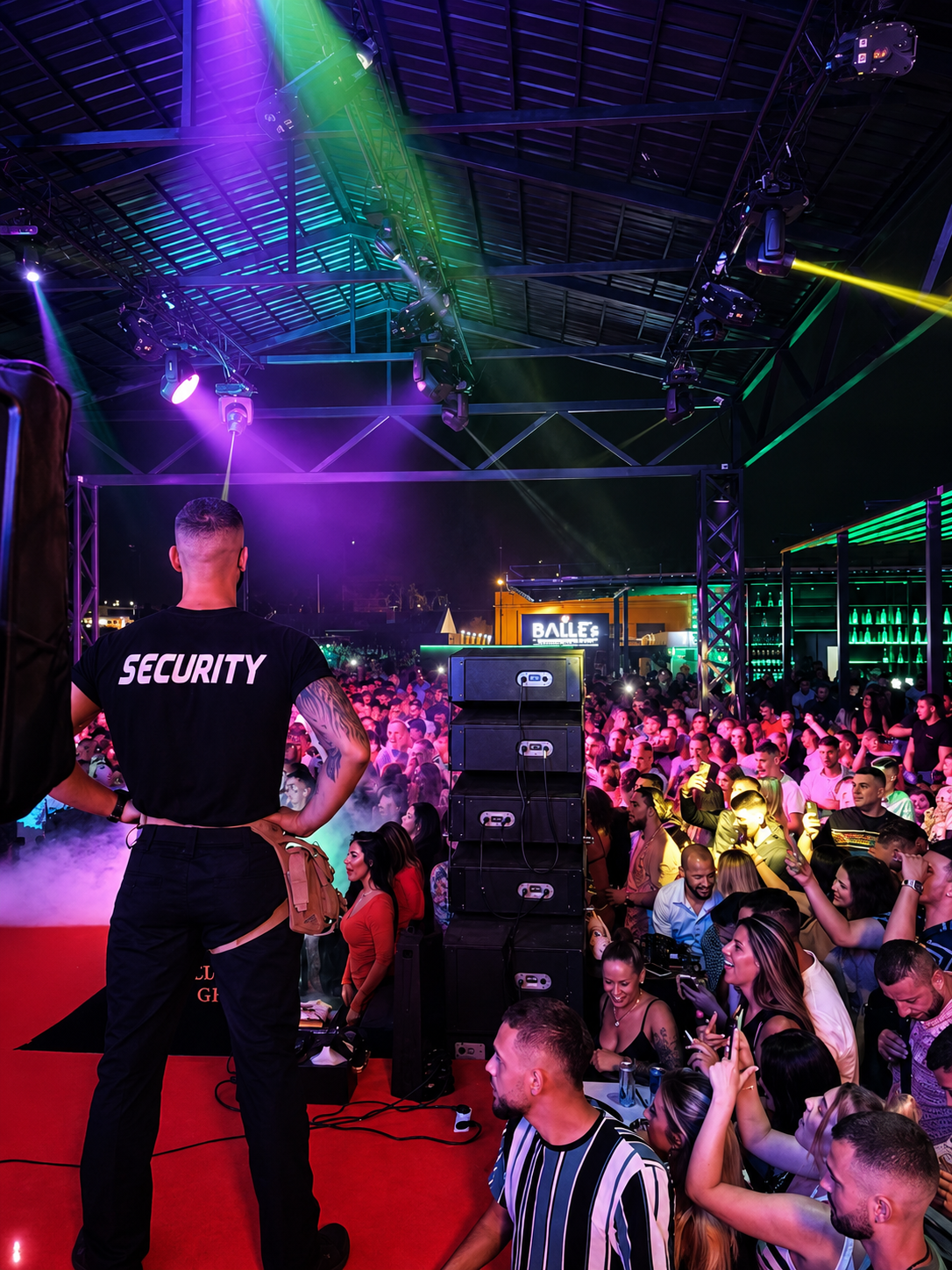
Why Nightlife Venues in Dubai Need Specialist Security
Dubai’s nightlife economy runs on volume, spend, and reputation, and all three are fragile in different ways.
A club doing 800 covers on a Saturday is managing a crowd the size of a small concert, inside a building with fixed exits, alcohol flowing continuously, and a guest list that spans tourists who don’t know local laws, regulars who think they’re exempt from them, and high-net-worth clients expecting a frictionless night. Add DJ bookings, artist riders, bottle service logistics, and cash moving through the venue, and you have an operation with more moving parts than most hospitality businesses.
Standard security guarding was built for retail units, offices, and static sites where the biggest risk is a break-in after hours. Nightlife security has to manage risk while the risk is actively unfolding in front of paying customers, without disrupting the atmosphere those customers paid to experience.
There’s also a regulatory layer that doesn’t exist in retail security. Venues operating in Dubai answer to Dubai Police licensing conditions, Dubai Civil Defence fire and occupancy rules, and SIRA (Security Industry Regulatory Agency) requirements for the guards themselves. A venue that treats security as an afterthought is exposed on all three fronts, not just the operational one.
Book a Free Venue Risk Inspection. Before your next licensing renewal, get a second set of eyes on your current setup.
Common Security Challenges Faced by Clubs and Bars
Every venue is different, but the same handful of problems show up on incident reports across the industry:
- Fake or borrowed IDs at the door, particularly during tourist season
- Overserved guests who become someone else’s problem an hour later
- Bottle service disputes over bills, table ownership, or promised seating
- Queue frustration turning into confrontations with door staff
- Theft from bags, tables, or the cash office during busy periods
- Unauthorised access through staff entrances or delivery doors
- Capacity breaches when door counts aren’t tracked in real time
- Slow incident escalation because staff aren’t trained on when to call it in versus handle it themselves
None of these are unusual. What separates a well-run venue from one heading toward a suspended licence is how consistently these situations are caught early and handled by people trained specifically for a nightlife floor.
Why Nightclub Security Is Different From Standard Security Guarding
What does a nightclub security company do?
A nightclub security company manages guest screening, crowd control, conflict de-escalation, VIP protection, and emergency response inside a live entertainment environment, combining hospitality judgment with licensed security training to keep the venue safe without disrupting the guest experience.
The core difference is environment. A retail guard is trained to observe and report. A nightclub security officer is trained to read a room that’s dark, loud, alcohol-affected, and constantly moving, and to make split-second calls about who needs a word, who needs removing, and who’s about to become a real problem in the next ten minutes.
This is a skill set built on crowd psychology, not just physical presence. Good nightlife security teams spend most of the night preventing incidents that never make it onto a report, because they intervened three minutes before the situation would have escalated.
Table: Standard Security Guards vs Specialist Nightclub Security Teams
| Feature | Standard Security Guard | Specialist Nightclub Security |
|---|---|---|
| Crowd Management | Basic | Advanced |
| Conflict De-escalation | Limited | Specialist Training |
| VIP Guest Handling | Basic | Professional |
| Entry Screening | Basic | Multi-Level Screening |
| Emergency Response | Standard | Venue-Specific Planning |
| Alcohol Incident Management | Limited | Extensive Experience |
| Capacity Control | No | Yes |
| Customer Service Skills | Moderate | Hospitality-Focused |
| Incident Reporting | Basic | Detailed Digital Reporting |
| Entertainment Venue Experience | Limited | Extensive |
If you’re comparing quotes and one is significantly cheaper, this table is usually why. A generic guarding rate reflects generic guarding.
Roles and Responsibilities of Professional Nightclub Security Officers
A nightclub security team isn’t one job repeated at different doors. It’s several distinct roles working together:
- Door supervisors managing entry, ID checks, and dress code
- Floor security monitoring the crowd, dance floor, and general seating
- VIP security attached to bottle service areas and private tables
- Roving patrol covering blind spots, corridors, and staff areas
- CCTV operators watching camera feeds in real time, not just recording them
- Emergency response leads coordinating evacuation or medical response if needed
Each role needs a different temperament. Door staff need patience and judgment under pressure from a queue. Floor teams need to blend into the room while staying alert. VIP security needs discretion and a service mindset as much as a security one. Treating all of these as interchangeable is one of the fastest ways a security plan falls apart on a busy night.
Door Supervision Beyond Checking IDs
Door supervision gets reduced to “checking IDs” in most people’s minds, but the door is actually where most of a venue’s risk gets filtered out before it ever reaches the floor.
A trained door supervisor is doing several things at once: verifying age and identity, reading intoxication level before someone’s even inside, assessing group dynamics for early warning signs of conflict, and managing dress code and capacity without turning the entrance into a confrontation zone.
ID Verification and Age Verification
Fake IDs in Dubai’s nightlife scene tend to fall into a few categories: expired passports, borrowed IDs between friends of similar appearance, and increasingly convincing forgeries brought in by tourists. Door staff trained specifically for nightlife venues know the physical security features to check on UAE Emirates IDs and international passports, and they know the questioning techniques that reveal a borrowed ID faster than staring at the photo does.
Guest Screening Procedures
Screening isn’t just about age. It covers:
- Visible intoxication before entry
- Weapons or prohibited items via bag inspection
- Dress code and venue-specific entry criteria
- Known troublemakers flagged from previous incidents
- Group size versus table or capacity availability
Speak with a Nightlife Security Consultant if your current door team is checking IDs but missing everything else on this list.
Queue Management Strategies
A badly managed queue is where a lot of avoidable incidents start. Guests standing in line for 40 minutes in Dubai heat, watching others get fast-tracked past them, are already frustrated before they reach the door.
Effective queue management includes:
- Clear lane separation for guest list, VIP, and general entry
- Visible communication about wait times so guests aren’t standing in silence
- A dedicated staff member managing the queue itself, separate from the door team doing ID checks
- Pre-screening further back in the line during peak periods, so bottlenecks at the door move faster
Venues that treat the queue as part of the guest experience, not just a holding pen, see fewer confrontations once people actually reach the door.
Conflict Prevention Before Incidents Escalate
How is nightclub security different from regular security?
Nightclub security focuses heavily on prevention, reading crowd behaviour, alcohol consumption, and group dynamics to intervene before conflict starts, rather than responding only after an incident has already occurred.
Most fights inside a club don’t start suddenly. There’s a build-up: raised voices, posturing, a spilled drink that becomes personal, a look held a second too long. Trained floor security is watching for these signals continuously, not waiting for a punch to be thrown before acting.
Crowd Psychology
Understanding how groups behave when alcohol, loud music, and low lighting are combined is core to prevention work. Crowds move in patterns. Tension spreads through proximity. A security officer who understands this positions themselves near developing hotspots before guests even realise there’s tension building.
De-escalation Techniques
When a situation is heating up, the goal is always to reduce tension without a physical confrontation. This means:
- Approaching calmly, not aggressively, even when guests are agitated
- Separating parties before words turn into contact
- Using clear, non-confrontational language rather than commands that feel like a challenge
- Involving a second officer for backup and visibility rather than escalating with force
Handling Aggressive Behaviour
When de-escalation doesn’t work and a guest becomes aggressive, trained officers know how to control the situation using approved physical intervention only as a last resort, prioritising the safety of other guests, staff, and the aggressive individual themselves. Every incident like this should be documented immediately afterward, which is covered in more detail below.
Managing Intoxicated Guests Professionally
How do clubs handle aggressive customers?
Clubs handle aggressive customers through early de-escalation, calm verbal intervention, and removal from the venue when necessary, using trained security staff who prioritise safety over confrontation and document every incident for accountability.
Overserved guests are one of the most common issues any nightclub security team deals with, and how they’re handled affects both safety and the venue’s reputation. Removing someone too aggressively creates a scene and potential liability. Ignoring clear signs of over-intoxication creates a much bigger risk: falls, alcohol poisoning, or a guest becoming a target for theft or harassment.
Professional handling includes coordinating with bar staff on last-call decisions for visibly intoxicated guests, offering water and a seated area before things get worse, and arranging safe transport home when a guest needs to leave. This is as much a hospitality skill as a security one.
Emergency Response Planning
What does emergency response planning cover for a nightclub? Every licensed venue needs a documented plan covering evacuation, fire safety, and medical response. Not a folder that sits in a drawer, but a plan the entire team has actually rehearsed.
Fire Evacuation Procedures
Dubai Civil Defence sets clear expectations around fire safety compliance for licensed entertainment venues, covering exit signage, capacity limits tied to fire egress capability, and staff training on evacuation procedures. Security teams need to know exit routes better than the DJ knows the next track, including secondary routes if a primary exit is blocked or congested.
Medical Emergencies
Alcohol, heat, dehydration, and dense crowds combine to make medical incidents a routine part of nightlife operations, not a rare event. A properly trained security team can administer basic first aid, recognise the difference between someone who needs air and water versus someone who needs an ambulance, and coordinate with venue management and emergency services without causing a scene that spreads panic through the room.
Get a Custom Security Plan built around your venue’s specific layout, capacity, and risk profile.
VIP Guest Protection and Celebrity Security
Dubai’s nightlife scene regularly hosts high-profile guests, touring artists, and clients spending significant money on tables, and this crowd needs a security approach built around discretion, not just presence.
VIP Table and Bottle Service Security
Bottle service areas carry cash, high-value bottles, and guests who expect privacy. Security assigned to these areas needs to manage access control so only invited guests reach the table, prevent theft of bottles or personal items left at the table, and de-escalate disputes over bills or seating without embarrassing the client in front of their group.
Celebrity Protection
When a well-known artist, athlete, or public figure is in the venue, security needs a plan for controlled entry and exit routes away from general guest flow, discreet positioning that doesn’t draw attention to the guest, and coordination with any personal security the guest has brought with them.
DJ, Artist, and Backstage Security
Touring DJs and performers need secure backstage areas, controlled access to green rooms, and safe movement between the stage and any VIP or exit areas. This is standard practice at any music festival and applies just as much inside a nightclub hosting a major booking.
Cash Office, POS, and Financial Security
Nightclubs move significant cash on a busy weekend, and the points where that cash is most vulnerable are the bar tills during service and the cash office during counting and transfer.
A properly secured operation includes:
- Restricted access to the cash office, with logged entry
- Security presence during cash transfers between the floor and the office
- CCTV coverage of till areas and the cash office itself
- Clear protocols for POS system access, so staff turnover doesn’t create ongoing vulnerabilities
This is an area operators often underestimate until an internal theft investigation reveals how exposed the process actually was.
Staff Entrance and Contractor Access Management
The front door isn’t the only door. Staff entrances, delivery access, and contractor visits are common blind spots that create unauthorised access risk.
Security teams should manage:
- ID verification for all staff entering through back-of-house doors
- Sign-in procedures for contractors, delivery drivers, and maintenance staff
- Restricted access to sensitive areas like the cash office or DJ booth for anyone without a specific reason to be there
- Coordination with venue management on approved contractor lists ahead of scheduled work
CCTV Monitoring and Surveillance Integration
Why is CCTV important in clubs?
CCTV provides continuous coverage of high-risk areas, including entry points, the cash office, bars, and the main floor, supporting real-time incident response, resolving disputes with evidence, and deterring theft or aggressive behaviour before it happens.
CCTV is only as useful as the process around it. A camera system recording to a hard drive nobody watches during service is a forensic tool after the fact, not a prevention tool during the night.
Properly integrated surveillance includes:
- Live monitoring during operating hours, not just after-the-fact playback
- Coverage of entry points, the main floor, bars, cash office, and staff entrances
- Body-worn cameras for door and floor security, which both deter aggressive behaviour and provide clear evidence if an incident does occur
- Mobile patrol coordination using radio contact with the CCTV operator, so a floor officer can be directed to a developing situation before it fully escalates
What security systems should every nightclub have?
Every nightclub should have integrated CCTV covering entry points and high-risk areas, an access control system for staff and VIP zones, a documented emergency response plan, and a digital incident reporting system connected to the security team’s daily operations.
Crowd Management During Peak Hours and Capacity Control
What is crowd management?
Crowd management is the practice of monitoring guest numbers, movement, and behaviour throughout a venue to prevent overcrowding, bottlenecks, and safety incidents, combining real-time headcounts with strategic staff positioning at doors, bars, and exits.
Capacity isn’t just a fire safety number on a licence certificate. It’s a live figure that needs tracking throughout the night, especially once a venue starts running close to its ceiling around midnight to 2am.
Effective capacity control requires:
- A real-time door count, tracked digitally rather than estimated
- Clear communication between the door team and floor management when capacity is approaching its limit
- A one-in-one-out policy during peak periods
- Awareness of how bottle service reservations and guest list numbers affect total capacity, not just walk-in guests
Venues that get this wrong don’t usually find out from a slow night. They find out from Dubai Civil Defence during an inspection, or worse, during an actual emergency where overcrowding turns a manageable evacuation into a dangerous one.
Event Security Inside Clubs and Festival Support
Special events, including big-name DJ bookings, brand activations, and ticketed events inside the venue, bring additional security demands beyond a normal weekend.
This includes coordinating with event promoters on guest list management, scaling up door and floor staffing to match expected attendance, planning artist and backstage security separately from general guest security, and adjusting evacuation and medical response plans for the temporary changes in layout or capacity an event might require.
Parking, Valet, and Perimeter Security
Security doesn’t stop at the front door. Parking areas and valet stands are common locations for vehicle theft, guest disputes over valet tickets, and general perimeter vulnerability once a venue’s main entrance is heavily staffed and attention is focused inward.
A complete security plan covers valet key control and vehicle handover verification, perimeter patrols around parking structures and venue exteriors, and coordination between perimeter staff and the main security team if something suspicious is spotted outside before it reaches the door.
Incident Reporting Procedures
What happens after an incident occurs? Every incident, however minor, should be logged the same night, not reconstructed from memory a week later when it becomes relevant to a licence review or insurance claim.
Good incident reporting includes a digital log with timestamps, staff involved, and a factual description of what happened, photo or CCTV reference numbers attached to the report where relevant, and a clear escalation path so venue management and, where required, Dubai Police are informed of serious incidents promptly.
This isn’t paperwork for its own sake. A consistent incident reporting history protects the venue during licence renewals, insurance disputes, and any legal proceedings that follow a serious incident.
Nightclub Security Technology
Beyond CCTV, most well-run venues now rely on a handful of supporting technologies:
- Digital door counting systems tied to capacity alerts
- ID scanning technology to catch fake documents faster than a visual check alone
- Radio communication systems linking door, floor, and management in real time
- Digital incident reporting platforms replacing paper logbooks
- Body-worn camera systems for accountability and evidence
None of this replaces trained people. It supports them, and it gives management visibility into what’s actually happening on the floor rather than relying on end-of-night summaries.
Risk Assessments Before Opening
What is a nightclub risk assessment? Before a new venue opens, or before an existing one renews its licence, a proper risk assessment reviews the physical layout for evacuation routes and blind spots, the expected guest volume and demographic against planned staffing levels, cash handling and financial security processes, and compliance against Dubai Police and Dubai Civil Defence requirements.
This is one of the most valuable services a specialist security provider offers, because it’s far cheaper to fix a layout or staffing gap on paper than after an incident forces the issue.
Request a Nightclub Security Assessment before your opening night, or before your next licence renewal.
Compliance With Dubai Regulations
Operating legally in Dubai’s nightlife space means working within a specific regulatory framework:
- SIRA licensing: every security officer deployed in the UAE must hold a valid SIRA licence, confirming they’ve completed the required training and background checks
- Dubai Police: venue licensing conditions often specify minimum security staffing and incident reporting obligations
- Dubai Civil Defence: fire safety compliance, capacity limits, and evacuation planning fall under their jurisdiction
Are nightclub security guards licensed in Dubai?
Yes. All security personnel operating in Dubai must hold a valid SIRA (Security Industry Regulatory Agency) licence. Reputable nightclub security companies only deploy SIRA-licensed officers and can provide documentation confirming this on request.
Working with a provider that can’t produce current SIRA documentation for its officers is a licensing risk that sits with the venue, not just the security company.
Benefits of Outsourcing Nightclub Security
Some larger hospitality groups build in-house security teams, but most venue operators find outsourcing to a specialist provider works out better on both cost and quality.
Outsourcing gives access to officers already trained specifically for nightlife environments, rather than training a team from scratch. It removes the HR burden of recruitment, licensing renewals, and shift management for a role that has high turnover industry-wide. It also means staffing can flex up for a big event or festival weekend and back down for a quiet Tuesday, without carrying year-round headcount for peak demand.
Why outsource nightclub security?
Outsourcing gives venues access to specialist-trained, SIRA-licensed officers, removes the recruitment and compliance burden from venue management, and allows staffing levels to flex around event demand rather than carrying fixed headcount for peak nights only.
Why Professional Training Matters
What training should nightclub security officers have?
Nightclub security officers should hold a SIRA licence at minimum, alongside specific training in crowd psychology, conflict de-escalation, alcohol-related incident management, first aid, and venue-specific emergency procedures relevant to nightlife environments.
A SIRA licence confirms baseline competency, but nightlife-specific training is what actually prepares an officer for a Friday night floor. This includes recognising the early signs of alcohol-related aggression, understanding how to communicate with intoxicated guests without escalating tension, physical intervention techniques used only as a last resort and within legal limits, and first aid and CPR certification given how often medical situations arise in a nightlife setting.
Venues that invest in providers who take this training seriously see it in the numbers that matter: fewer serious incidents, faster resolution when something does happen, and better guest reviews around how situations were handled.
How Many Security Guards Does a Nightclub Need?
How many security guards does a nightclub need?
Staffing depends on venue capacity, layout, and guest profile, but as a general guide, most nightclubs need one security officer for every 75–100 guests, with additional dedicated staff for VIP areas, the cash office, and entry points during peak hours.
A 300-capacity lounge with a low-key crowd needs a very different staffing plan from an 800-capacity superclub running until 3am with heavy bottle service. A proper risk assessment, not a generic ratio, is what determines the right number for your specific venue, but the ratio above is a reasonable starting point for budgeting conversations.
Can Security Guards Remove Disruptive Guests?
Can security guards remove disruptive guests?
Yes. Licensed security officers can remove guests who are disruptive, aggressive, or in breach of venue policy, provided removal is carried out professionally, proportionately, and in line with UAE law, with the incident documented immediately afterward.
The key word is proportionate. Removal should always be the last step after de-escalation attempts, and it should be handled calmly enough that it doesn’t itself become the spectacle other guests remember about the night.
How Do VIP Security Teams Operate in Nightlife Venues?
How do VIP security teams operate in nightlife venues?
VIP security teams manage discreet access control, monitor bottle service tables for theft or disputes, coordinate entry and exit routes for high-profile guests, and work closely with venue hosts to protect the guest experience without drawing unwanted attention.
The best VIP security is barely noticed by the guests it’s protecting. It’s positioned close enough to respond instantly and far enough away to preserve the atmosphere the client is paying for.
How Much Does Nightclub Security Cost in Dubai?
How much does nightclub security cost in Dubai?
Nightclub security costs in Dubai vary based on venue size, guest volume, and the level of specialist coverage required, including door supervision, floor security, VIP teams, and CCTV monitoring. Most venues receive a custom quote following a venue risk assessment rather than a flat per-hour rate.
Pricing depends on factors like the number of officers required per shift, whether VIP or celebrity protection is needed for specific events, CCTV monitoring and technology integration, and whether staffing needs to flex for special events or festival bookings. A proper quote should always follow a site visit and risk assessment, not a phone call estimate.
Why Choose Vraaas Security
Vraaas Security works exclusively across Dubai’s hospitality and nightlife sector, deploying SIRA-licensed officers trained specifically for the demands of nightclub, bar, lounge, and beach club environments. The team’s approach is built around prevention first, reading a room before it becomes a problem, backed by clear incident reporting, CCTV integration, and emergency response planning tailored to each venue’s layout and licence conditions.
Whether you’re opening a new venue and need a risk assessment before your first weekend, or reviewing a current security setup that isn’t performing the way it should, the process starts with understanding your venue, not a generic staffing quote.
Contact Vraaas Security Today to arrange a venue risk inspection and a custom nightclub security plan built around how your venue actually operates.
Frequently Asked Questions
What does a nightclub security company do?
A nightclub security company manages every layer of guest and venue safety, including door supervision, ID and age verification, crowd management, conflict de-escalation, VIP protection, CCTV monitoring, and emergency response, using officers trained specifically for nightlife environments rather than general guarding duties.
Are nightclub security guards licensed in Dubai?
Yes. Every security officer deployed in the UAE must hold a valid SIRA licence. Reputable providers deploy only SIRA-licensed officers and can confirm this with documentation on request.
How many security guards does a nightclub need?
Most venues need roughly one officer per 75–100 guests, with additional dedicated staff for VIP areas, entry points, and the cash office during peak hours. A proper risk assessment determines the exact figure for your specific layout and capacity.
What training should nightclub security officers have?
Beyond a SIRA licence, officers should be trained in crowd psychology, conflict de-escalation, alcohol-related incident management, first aid and CPR, and venue-specific emergency procedures.
What is crowd management?
Crowd management is the ongoing monitoring of guest numbers, movement, and behaviour to prevent overcrowding and safety incidents, combining real-time headcounts with strategic staff positioning throughout the venue.
How do clubs handle aggressive customers?
Through early de-escalation, calm verbal intervention, and removal only when necessary, using trained staff who prioritise safety over confrontation and document every incident.
Can security guards remove disruptive guests?
Yes, provided the removal is proportionate, professional, and compliant with UAE law, with the incident documented immediately afterward.
What security systems should every nightclub have?
Integrated CCTV covering entry points and high-risk areas, an access control system for staff and VIP zones, a documented emergency response plan, and a digital incident reporting system.
Why is CCTV important in clubs?
CCTV provides continuous coverage of high-risk areas, supports real-time incident response, resolves disputes with evidence, and deters theft or aggressive behaviour before it escalates.
How much does nightclub security cost in Dubai?
Costs vary based on venue size, guest volume, and the level of coverage required. Most venues receive a custom quote following a site visit and risk assessment rather than a flat rate.
Why outsource nightclub security?
Outsourcing provides access to specialist-trained, SIRA-licensed officers, removes recruitment and compliance burden from venue management, and allows staffing to flex around event demand.
How do VIP security teams operate in nightlife venues?
They manage discreet access control, monitor VIP tables for theft or disputes, coordinate entry and exit routes for high-profile guests, and work closely with hosts to protect the guest experience without drawing attention.
Contact Vraaas Security Services
Have questions about VIP event security, close protection, or a custom security plan for your next event in Dubai? Our team is ready to help any time.
| 📞 Phone | +971 523011999 |
| info@vraaassecurity.com | |
| 🌐 Website | vraaassecurity.com |
| 📍 Address | Capital Golden Tower, Office No. 1105, Business Bay, Dubai, UAE |
Connect With Us
Follow Vraaas Security on social media for security tips, event highlights, and updates on VIP protection services across the UAE. Join a growing community of event organizers and security professionals who trust us.
- Instagram: @vraaas_security
- Facebook: Vraaas Security Services
- LinkedIn: Vraaas Security Services
- TikTok: @vraaas_security
Vraaas Security Services — Protecting What Matters Most in Dubai.