
Companies operating out of DIFC and Business Bay carry a different kind of exposure than a typical commercial tenant. A law firm holding client files, a fintech startup with a server room down the hall, and a regional headquarters hosting visiting executives all have assets that a lobby desk and a swipe card alone won’t protect. Vraaas Security works with businesses across these two districts to build office security programs that match the actual risk profile of a modern corporate tower, not a generic guard rota copied from a retail mall contract.
This article walks through what professional office security actually involves, where most in house arrangements fall short, and how a security plan built for your office reduces exposure without turning your reception area into a checkpoint.
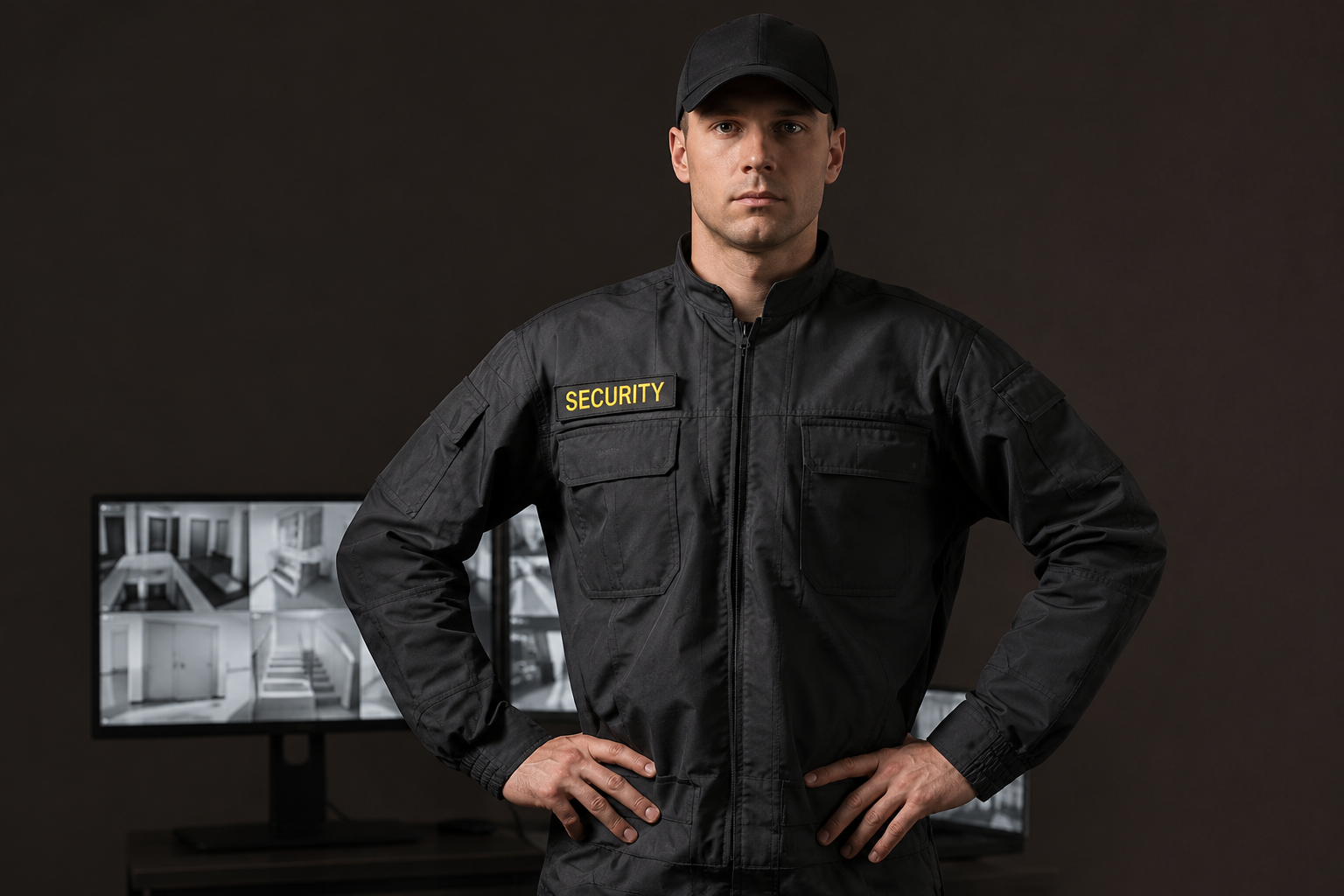
Why Office Security Matters in DIFC and Business Bay
DIFC hosts hundreds of financial institutions, law firms, and multinational regional offices, many of which are required, contractually or by regulator, to demonstrate a defined level of physical security control. Business Bay, just across Sheikh Zayed Road, has grown into a dense mix of consulting firms, tech companies, and business centres, many operating across multiple floors of shared towers with communal lobbies and lift lobbies that aren’t under any single company’s direct control.
That shared building reality is the core problem. A tenant on the 14th floor doesn’t control who enters the building lobby, but they are still responsible for who reaches their own office door. Vraaas Security designs guard deployments around that gap, reinforcing the point where building wide access control ends and a company’s own perimeter begins.
Request a Security Assessment if you want a clear view of where your own office’s exposure currently sits.
Common Security Risks for Corporate Offices
Most incidents in office towers aren’t dramatic. They’re small failures that compound:
- A courier walking straight past reception because no one flagged them down
- A terminated employee’s access card still working three days after their exit
- A contractor left unsupervised in a server room during an after hours maintenance visit
- Confidential documents left on a printer in a shared floor
- A meeting room booked for a sensitive negotiation with no check on who’s actually in the room
None of these require a sophisticated attacker. They require an absence of process, and that absence is exactly what a trained guard presence closes.
Responsibilities of Professional Office Security Guards
A licensed office security guard does more than stand near a door. Day to day, the role typically covers:
- Verifying identity and purpose of everyone entering the premises
- Managing sign in and sign out logs for visitors and contractors
- Monitoring CCTV feeds and flagging anomalies in real time
- Conducting scheduled patrols of the office floor, storage areas, and parking
- Responding first to any security or safety incident and escalating correctly
- Coordinating with building management and civil defence during emergencies
- Maintaining a written incident log for every shift
The value isn’t any single task on that list. It’s that all of them are being done consistently, by someone trained to notice when something is off.
Reception and Front Desk Security
The front desk is the first filter for who reaches your staff. A trained reception security guard does more than greet. They confirm who a visitor is meeting, verify that meeting is expected, and hold visitors in a controlled waiting area rather than allowing them to walk unaccompanied into open plan work areas. For law firms and financial institutions in DIFC, where client confidentiality is part of the professional obligation, this single control point often prevents the majority of unauthorized access incidents before they start.
Visitor Management
How does visitor management improve office security? Visitor management reduces unauthorized access by requiring identification, a stated purpose, and host confirmation before entry. Logged visitor records also give a company a clear audit trail if an incident needs to be investigated later, which matters for regulated firms operating in DIFC.
A proper visitor process includes a signed register or digital log, a visible badge for the duration of the visit, and an escort policy for restricted areas such as server rooms or executive floors. Vraaas Security guards are trained to apply this consistently, including during busy periods when it’s tempting to wave people through.
Employee Access Control
What is office access control? Office access control is the set of physical measures, such as key cards, biometric readers, PIN pads, or guard verification, that determine who can enter specific areas of an office. It restricts movement to only those authorized for a given zone, such as restricting server room access to IT staff.
Guards play a role here that technology alone can’t replace: recognizing tailgating, catching a card that’s been shared between employees, and flagging access attempts outside normal working hours that don’t match an employee’s usual pattern.
Contractor and Vendor Access
Cleaning crews, IT vendors, catering staff, and maintenance contractors are a routine part of office life, and a routine blind spot. Contractors should be logged in the same way as visitors, escorted into restricted zones, and signed out before leaving. Vraaas Security guards keep a running contractor log per shift, which building management and internal facilities teams can reference if equipment or documents go missing after a service visit.
CCTV Monitoring
Cameras record; guards interpret. A monitored CCTV system with a trained guard watching feeds in real time can intervene during an incident, not just provide footage afterward. For offices in Business Bay towers with communal parking and shared lift lobbies, tying office level CCTV monitoring into the guard’s daily routine closes a gap that passive recording leaves open.
Office Patrol Services
Scheduled and randomized patrols of the office floor, store rooms, server areas, and parking bays serve two purposes: they catch problems early, such as an unlocked door or a left open cabinet, and they act as a visible deterrent. Patrol logs, timestamped and reviewed, also give facilities managers a documented record for insurance and compliance purposes.
Emergency Response Procedures
Speak With a Security Consultant if your current emergency plan hasn’t been reviewed in the last year, since most haven’t.
Guards trained in emergency response know the building’s evacuation routes, muster points, and the correct sequence of who to notify first, whether that’s civil defence, building management, or an internal crisis contact. In a high rise office tower, the first three minutes of an incident response often matter more than anything that happens afterward.
Fire Safety Coordination
Security guards frequently act as the first point of coordination during a fire alarm, confirming whether it’s a drill, directing staff to evacuation routes, and liaising with building fire wardens and Dubai Civil Defence teams. This coordination role is separate from, but works alongside, the building’s own fire safety systems.
Parking Area Security
Basement and podium parking areas in Business Bay and DIFC towers are commonly used by multiple tenants, which makes them harder to monitor with cameras alone. Guard patrols through parking levels reduce vehicle break ins, unauthorized parking, and after hours loitering that building wide security may not catch on a fixed schedule.
Asset Protection
IT equipment, petty cash, branded merchandise, and physical documents are common targets in office theft, and they’re rarely stolen through forced entry. More often, they go missing through an unlocked cabinet or an unattended desk during a busy period. Guards trained in asset protection build daily checks of valuable areas into their patrol routine, rather than treating it as an afterthought.
Data Centre and Server Room Security
For technology companies and financial institutions, the server room is often the single most sensitive space in the office. Access should be restricted to a named list of authorized personnel, logged on every entry, and never left open during maintenance visits without a guard or authorized staff member present. This is one of the areas where Vraaas Security builds a specific access protocol per client, rather than applying a standard office rule.
Executive Protection for Corporate Leaders
Regional headquarters and multinational offices in DIFC frequently host visiting executives, board members, or clients who warrant a closer level of personal security during their time on site. This can include coordinated arrival and departure procedures, controlled access to executive floors, and a guard presence during high profile meetings, scaled to the actual risk rather than applied as a blanket measure.
Meeting and Conference Security
Sensitive negotiations, board meetings, and client presentations benefit from a controlled access point at the meeting room itself, particularly in shared business centres where foot traffic on a floor can’t always be predicted. A guard confirming attendee lists before allowing entry adds a layer that a closed door alone doesn’t provide.
After Hours Office Security
What do office security guards do outside of business hours matters as much as during the day. Empty offices overnight and on weekends are a common target window, since fewer people are around to notice something wrong. After hours coverage includes scheduled patrols, alarm response, and a documented check in process so building management and company leadership have a clear record of what happened on site outside working hours.
Incident Reporting
Every incident, however minor, should be logged with a time, description, and action taken. This isn’t paperwork for its own sake. It’s what allows a company to identify patterns, such as the same visitor trying the same door twice or a recurring issue with a specific access point, rather than treating every incident as a one off.
Security Risk Assessments
How often should office security risk assessments be completed? Most corporate offices benefit from a formal risk assessment annually, with a follow up review after any major change, such as a new office layout, a change in tenant mix in the building, or an incident that exposed a gap in current procedures.
A risk assessment looks at physical layout, access points, visitor flow, existing controls, and past incidents to produce a specific set of recommendations, rather than a generic checklist. Get a Customized Office Security Plan built from an assessment of your actual floor, not a template.
Benefits of Outsourcing Office Security
What are the benefits of outsourced office security? Outsourcing gives companies access to licensed, trained guards without the overhead of direct recruitment, payroll, and ongoing training. It also provides flexibility to scale coverage up or down and consistent quality standards that are harder to maintain with a small internal team.
An in house arrangement often means one or two staff covering a role that really needs shift coverage, backup during sick leave, and ongoing refresher training. A managed service is built to handle exactly that.
In House Security Team Compared With Professional Office Security Services
| Feature | In House Team | Vraaas Security |
|---|---|---|
| Recruitment | Internal | Managed Service |
| Licensed Security Guards | Limited | Yes |
| Twenty Four Hour Coverage | Optional | Available |
| Visitor Management | Basic | Professional |
| CCTV Monitoring | Basic | Advanced |
| Emergency Response | Internal | Trained Personnel |
| Staff Training | Limited | Ongoing |
| Scalability | Limited | Flexible |
| Compliance | Variable | High |
Why Businesses Choose Vraaas Security
Companies in DIFC and Business Bay choose Vraaas Security because the guard deployment is built around the specific building, floor layout, and industry the client operates in, rather than a standard package. Financial institutions get a program shaped around confidentiality and access control. Law firms get visitor management tuned to client privilege. Technology companies get server room protocols that match their compliance needs. Guards are licensed, trained, and supervised, with clear reporting lines back to the client’s own facilities or operations manager.
Contact Vraaas Security Today to discuss what a program built for your specific office would look like.
Frequently Asked Questions
Why do businesses in DIFC need security guards?’
DIFC hosts financial institutions and multinational firms that handle confidential client information and are often expected to demonstrate defined physical security controls, making trained guard coverage a practical and often contractual necessity.
What industries require office security in Business Bay?
Consulting firms, technology companies, business centres, and regional offices in Business Bay commonly use office security guards, particularly where a building has multiple tenants sharing lobbies and parking.
What responsibilities do office security guards have?
Guards manage visitor and contractor access, monitor CCTV, conduct patrols, respond to incidents, and maintain incident logs, working alongside a company’s own facilities and operations teams.
How do security guards control office access?
Guards verify identity and purpose at entry points, check credentials against expected visitor or employee lists, and flag any attempt to bypass normal access procedures, including tailgating.
What is included in office security services?
Services typically include reception coverage, visitor and contractor management, CCTV monitoring, patrols, emergency response coordination, and incident reporting, tailored to the specific office and industry.
Are office security guards licensed in Dubai?
Yes. Guards operating in Dubai are required to hold a valid security license issued under UAE regulations, and reputable providers only deploy licensed personnel to client sites.
Can security guards monitor CCTV systems?
Yes. Trained guards can monitor live CCTV feeds as part of their shift responsibilities, allowing real time response to anything unusual rather than relying solely on recorded footage.
How often should office security risk assessments be completed?
Annually at minimum, with an additional review after any significant change to the office layout, tenant mix, or after any incident that revealed a gap in existing procedures.
What are the benefits of outsourced office security?
Outsourcing provides licensed and trained guards, consistent coverage without recruitment overhead, and the flexibility to scale the security program as the business grows or its risk profile changes.
How much do office security guards cost in Dubai?
Cost depends on coverage hours, number of guards, and the scope of services required (reception, patrols, CCTV monitoring, after hours coverage). Schedule a Site Visit for a quote based on your specific office rather than a generic estimate.
Contact Vraaas Security Services
Have questions about VIP event security, close protection, or a custom security plan for your next event in Dubai? Our team is ready to help any time.
| 📞 Phone | +971 523011999 |
| info@vraaassecurity.com | |
| 🌐 Website | vraaassecurity.com |
| 📍 Address | Capital Golden Tower, Office No. 1105, Business Bay, Dubai, UAE |
Connect With Us
Follow Vraaas Security on social media for security tips, event highlights, and updates on VIP protection services across the UAE. Join a growing community of event organizers and security professionals who trust us.
- Instagram: @vraaas_security
- Facebook: Vraaas Security Services
- LinkedIn: Vraaas Security Services
- TikTok: @vraaas_security
Vraaas Security Services — Protecting What Matters Most in Dubai.