
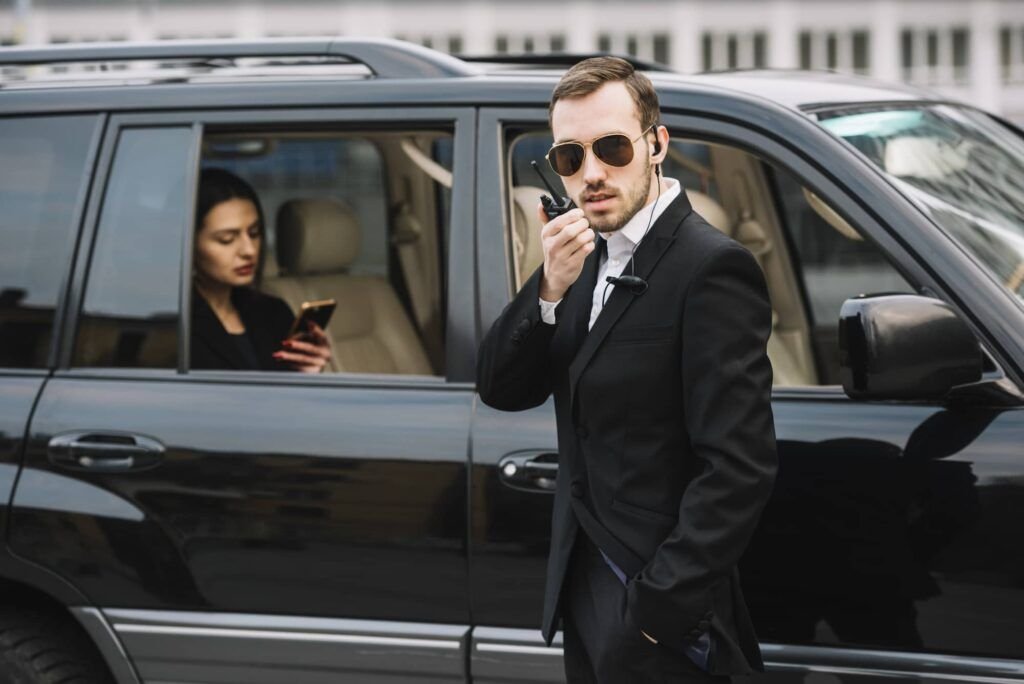
You have probably seen it in movies. A big, serious-looking man in a black suit walks right next to a celebrity. He scans the crowd. He speaks into an earpiece. He looks like he could stop a train with his bare hands.
That image sticks in people’s minds. But here is the thing — real personal security in Dubai looks very different from what you see on screen.
When people start looking for personal protection services in Dubai, they almost always ask the same question: “Do I need a bodyguard or a close protection officer?” Most people think these are two words for the same job. They are not.
Getting this wrong can leave you with the wrong type of protection. And in a city as fast-moving and high-profile as Dubai, that is a risk you do not want to take.
Let us walk through everything you need to know, clearly and simply.
First, What Is a Bodyguard?
The word “bodyguard” has been around for centuries. It simply means a person hired to physically protect someone else.
In everyday use in Dubai, a bodyguard is often thought of as someone who stands close to a client, looks intimidating, and reacts if something goes wrong. Their job is mostly reactive — meaning they respond to a problem once it starts.
Bodyguards may or may not have formal training. Some come from military or police backgrounds. Others do not. The level of skill varies a lot from person to person.
In Dubai specifically, the law does not formally recognize the title “bodyguard.” Under Dubai legislation and the Security Industry Regulatory Authority (SIRA), the closest recognized role is called a “personal security guard.” This is an important legal point that many people miss when searching for protection in the UAE.
So, What Is a Close Protection Officer?
A close protection officer, often called a CPO, is a trained security professional who does a lot more than just stand near a client.
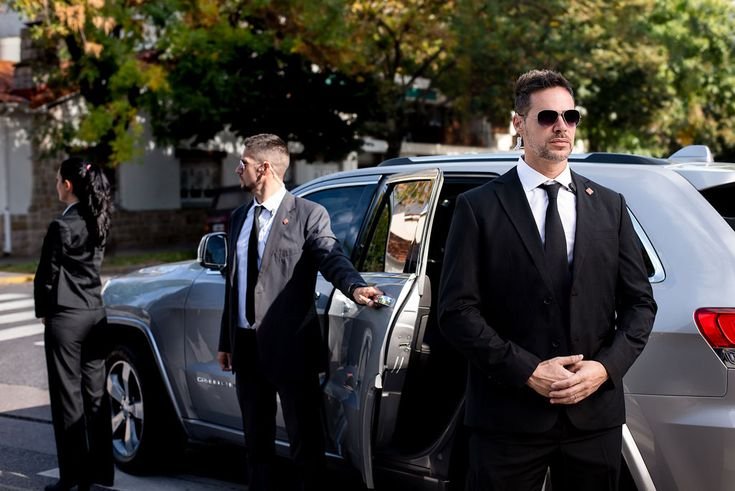
A CPO plans ahead. Before a client arrives at a hotel, a meeting, or a venue, the CPO has already been there. They have checked the exits. They have identified potential risks. They have mapped out the safest route. They have spoken to venue staff.
This is what separates a close protection officer from a regular bodyguard. A CPO does not wait for a threat to appear. They work to make sure a threat never gets close enough to matter.
A close protection officer in Dubai typically handles:
- Advance planning and route security for all movements
- Threat assessment and risk analysis before each outing
- Surveillance detection, meaning they look for anyone watching or following the client
- Secure transportation and defensive driving
- Coordination with event venues, hotels, and local authorities
- Emergency response and extraction if a situation becomes dangerous
- Protecting the client’s privacy and reputation alongside their physical safety
The training required for a professional CPO is specific, structured, and ongoing. In Dubai, all legitimate security professionals must be licensed through SIRA, the Security Industry Regulatory Authority. Without this certification, a security professional cannot legally operate in Dubai. Any company you work with should be SIRA-certified — full stop.
The Real Difference: Reactive vs. Proactive
Here is the simplest way to understand it.
A bodyguard reacts. A close protection officer prevents.
Think of it like this. A bodyguard waits at the door and acts if someone tries to get through. A close protection officer checks who has been near the door for the past hour, reviews the guest list, positions team members at key points, and makes sure an emergency exit is identified before the client even walks in.
One approach handles problems as they happen. The other tries to stop problems from happening at all.
In high-profile environments, the reactive approach is simply not enough. By the time a threat becomes visible, it may already be too late. Proactive protection — the kind a trained CPO provides — is built around making the client’s environment safe before they step into it.
What the Numbers Say About Security in Dubai and the UAE
Security in the UAE is a serious and growing industry. According to a 2024 market report, the UAE security services market was valued at USD 1.8 billion, with Dubai and Abu Dhabi identified as the cities driving the most demand. That figure is expected to reach USD 3.1 billion by 2030, growing at a rate of 9.4% per year.
This growth is not happening by accident. Dubai attracts ultra-high-net-worth individuals, global executives, diplomats, celebrities, and government officials from around the world every single day. Many of these people need personal protection that matches the professional standard of the city itself.
According to the same analysis, the demand for personal security services is highest in the corporate and VIP sectors, exactly where the need for trained close protection officers — not just bodyguards — is most felt.
A Side-by-Side Look: Bodyguard vs. Close Protection Officer
| Factor | Bodyguard | Close Protection Officer (CPO) |
|---|---|---|
| Training level | Varies, often basic | Advanced, structured, ongoing |
| SIRA licensing | May or may not hold | Required for legal operation in Dubai |
| Approach to threats | Reactive | Proactive and preventive |
| Advance planning | Usually none | Always done before each outing |
| Surveillance detection | Not standard | Core part of the job |
| Emergency extraction | Limited capability | Trained specifically for this |
| Client privacy protection | Not prioritized | High priority |
| Works best for | Low-risk situations | High-profile or high-risk clients |
This table makes it clear that the two roles are not interchangeable. Choosing the wrong one based on your situation can leave you exposed in ways you might not even realize.
Who Actually Needs a Close Protection Officer in Dubai?
A lot of people think personal security is only for celebrities or heads of state. That is a common misunderstanding.
In reality, close protection services in Dubai are used by a wide range of people:
Corporate executives who travel frequently, handle sensitive business deals, or operate in industries where tensions run high.
High-net-worth families who want to move around Dubai safely — including school runs, shopping, and social events — without drawing attention.
International visitors attending major events, business summits, or government-level meetings in the UAE.
Individuals facing personal threats, whether those come from business disputes, public attention, or personal conflicts.
Public figures and influencers whose visibility online has created real-world attention, not all of it welcome.
The need for close protection often comes down to one thing: risk level. If your daily life puts you in situations where your safety could be at risk — whether that risk is physical, reputational, or related to privacy — a close protection officer gives you structured, professional coverage.
A regular bodyguard may provide comfort. A CPO provides actual security.
How Does a Professional CPO Actually Work Day to Day?
People often picture a close protection officer standing behind a client with their arms crossed. In reality, most of the work happens before the client even gets ready to leave the house.
A typical day for a CPO working in Dubai might start with reviewing the client’s schedule. Every location on the plan gets checked in advance — the route, the parking arrangements, the venue layout, the people expected to be there.
Before the client arrives anywhere, the CPO (or an advance team member) has already been there. They know where the exits are. They have introduced themselves to venue security. They know where the car will wait.
During the actual movement, the CPO stays aware of everything around the client. This is called situational awareness, and it is trained into every serious protection professional. It is not about being paranoid. It is about being prepared.
When the day ends, the CPO reviews what happened, notes anything unusual, and adjusts the next day’s plan if needed.
This level of planning and attention is what a bodyguard, in the traditional sense of the word, does not provide.
What About Dubai’s Laws on Armed Protection?
This is a question many clients ask, especially those coming from countries where private bodyguards are routinely armed.
In Dubai, private security personnel — including close protection officers — cannot carry firearms. The law is clear on this. Only law enforcement officers under official UAE authority are permitted to carry weapons in a civilian protection role.
This does not mean professional close protection in Dubai is ineffective. Quite the opposite. A skilled CPO relies on preparation, threat awareness, de-escalation, and positioning to keep clients safe. These skills, applied properly, prevent situations from reaching the point where a physical response would even be needed.
The best close protection professionals in Dubai are not the ones who look the most intimidating. They are the ones nobody notices at all.
How to Choose the Right Personal Security Service in Dubai
If you are thinking about personal security in Dubai, here are the practical things to look for:
SIRA certification is non-negotiable. Any individual or company providing security services in Dubai must be licensed through the Security Industry Regulatory Authority. Ask for proof of certification before you agree to anything.
Ask about training. A professional CPO should be able to tell you exactly what training they have completed — protective driving, first aid, surveillance detection, risk assessment. Vague answers are a warning sign.
Ask how they plan. A serious protection professional will always want to know your schedule in advance, review locations, and build a protection plan. If they just ask “where do you want me to show up?”, that is not close protection. That is a minder.
Ask about discretion. Good protection should not announce itself. If a security company’s first instinct is to send someone large and obvious, ask them whether a more discreet option is available. Low-profile protection is often more effective.
Ask about their track record. Experience matters. A company that has protected corporate clients, international visitors, and high-profile individuals in Dubai will handle unexpected situations with far more skill than someone new to the role.
Why This Matters More in Dubai Than Almost Anywhere Else
Dubai is one of the world’s most active cities. Major business deals happen here. Global events bring tens of thousands of visitors. The city’s open, international environment is one of its greatest strengths — and it also means that public spaces are busy, access points are varied, and the people you meet come from every part of the world.
Professional close protection services in Dubai are built around this reality. The job is not just about standing next to someone. It is about understanding the environment, anticipating what can go wrong, and making sure the client’s day goes exactly as planned.
When you invest in trained close protection rather than an informal bodyguard arrangement, you are not just paying for a person. You are paying for a system — planning, awareness, communication, and response — that works in the background so you never have to think about it.
Frequently Asked Questions
1. Is there a legal difference between a bodyguard and a close protection officer in Dubai?
Yes. Dubai law does not formally recognize the title “bodyguard.” The legally recognized role under SIRA regulation is “personal security guard.” However, the level of training and certification varies greatly. A professional close protection officer will hold specific certifications and operate under a SIRA-licensed company.
2. Do I need a close protection officer if Dubai is already so safe?
Dubai is one of the safest cities in the world. But safety for the general public does not always match the specific risk profile of a high-profile individual, executive, or public figure. CPO services are about managing personal risk, not just general crime statistics.
3. Can a close protection officer in Dubai carry a weapon?
No. Private security professionals in Dubai, including CPOs, are not permitted to carry firearms. Protection relies on training, planning, and situational awareness rather than armed force.
4. How far in advance do I need to book a close protection officer in Dubai?
For short-term visits or events, a few days’ notice is often enough for a reputable company. For longer engagements or complex security plans, more lead time allows for proper advance work and preparation.
5. What is SIRA and why does it matter?
SIRA stands for the Security Industry Regulatory Authority. It is the government body in Dubai that licenses and regulates all private security companies and personnel. Working with a non-SIRA-certified provider is illegal and puts both the client and the security professional at risk of fines and legal consequences.
6. Can I hire a female close protection officer in Dubai?
Yes. Many reputable security companies in Dubai, including Vraaas Security, offer female close protection officers. This is particularly useful for female clients who need discreet protection in environments where a male CPO would draw attention or cause discomfort.
7. What is the difference between executive protection and close protection?
The terms are often used interchangeably. Executive protection typically refers to close protection services specifically for corporate or business clients — senior executives, board members, or high-level managers. Close protection is the broader term covering any individual who needs personal security coverage.
8. What does advance work mean in close protection?
Advance work means a CPO visits locations ahead of the client’s arrival to check for risks, identify exits, confirm safe parking, and communicate with venue security. It is one of the most important parts of professional close protection.
9. Is close protection in Dubai only for very wealthy people?
Not necessarily. Close protection services are available at different levels. Short-term coverage for a specific event or trip can be surprisingly accessible. The right security company will work with you to match the level of protection to your actual situation and budget.
10. How is personal security handled during large events in Dubai?
For major events — corporate summits, product launches, award ceremonies — a CPO works alongside event security teams. Their role is specifically focused on the individual client: their movements, exits, and safety within the broader event environment.
11. What should I look for when choosing a close protection company in Dubai?
Look for SIRA licensing, documented training records for their officers, a clear process for advance planning, references from past clients, and a team that prioritizes discretion. Companies that offer full transparency about their methods are almost always the better choice.
12. Does Vraaas Security provide close protection services in Dubai?
Yes. Vraaas Security provides professional close protection services across Dubai and the UAE. Our officers are trained, SIRA-compliant, and experienced in protecting corporate clients, VIPs, international visitors, and high-profile individuals. We build protection plans around your specific schedule, movement patterns, and risk level — not a one-size-fits-all approach.
Contact Vraaas Security Services
Have questions about VIP event security, close protection, or a custom security plan for your next event in Dubai? Our team is ready to help any time.
| 📞 Phone | +971 523011999 |
| info@vraaassecurity.com | |
| 🌐 Website | vraaassecurity.com |
| 📍 Address | Capital Golden Tower, Office No. 1105, Business Bay, Dubai, UAE |
Connect With Us
Follow Vraaas Security on social media for security tips, event highlights, and updates on VIP protection services across the UAE. Join a growing community of event organizers and security professionals who trust us.
- Instagram: @vraaas_security
- Facebook: Vraaas Security Services
- LinkedIn: Vraaas Security Services
- TikTok: @vraaas_security
Vraaas Security Services — Protecting What Matters Most in Dubai.